- College Inside
- Posts
- An art course designed in prison
An art course designed in prison
An incarcerated artist helped create a course and a scholarship for other students

Charlotte West
March 23, 2026

A biweekly newsletter about education and employment during and after prison. Written by Open Campus national reporter Charlotte West.
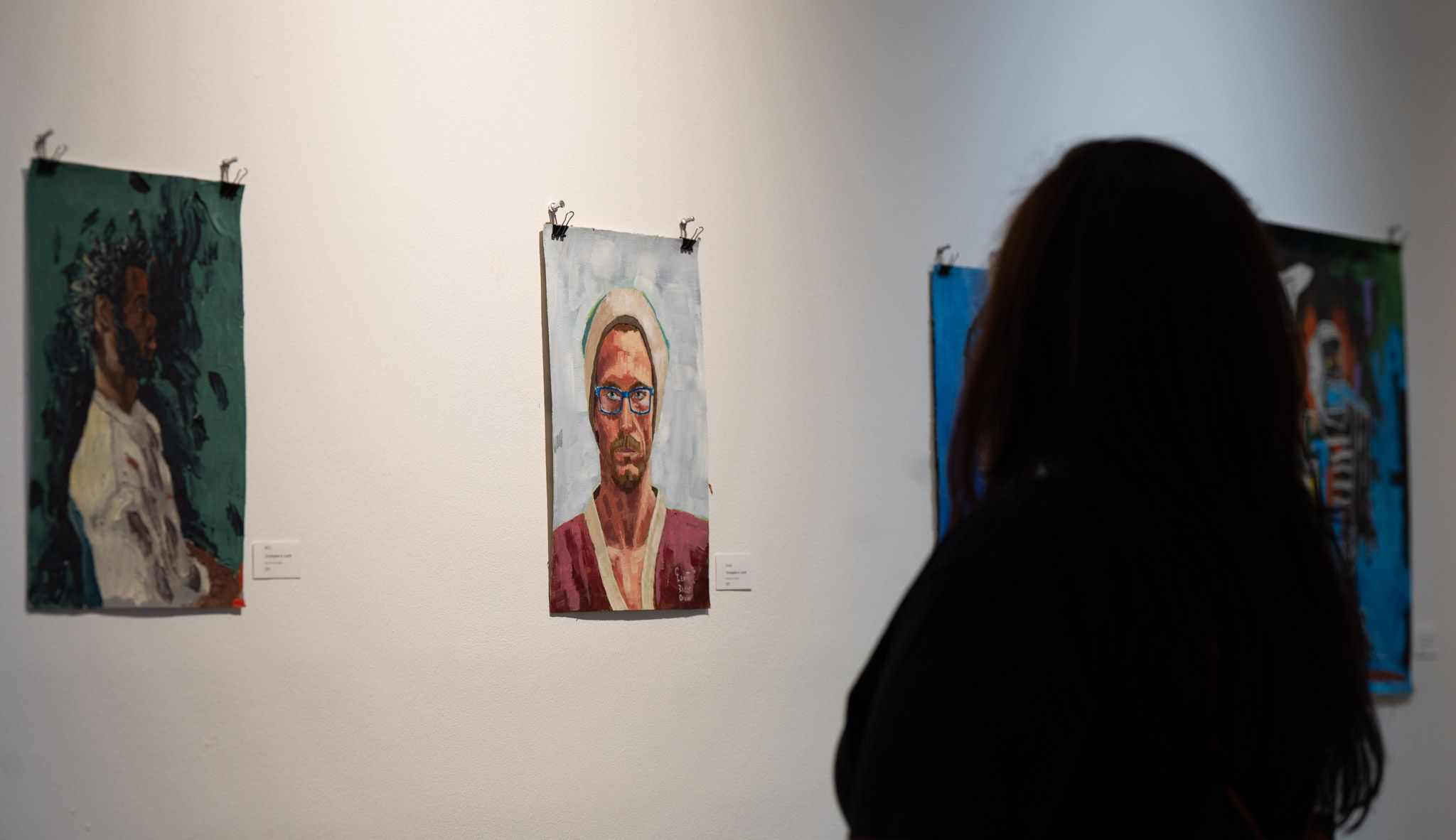
Incarcerated artist Christopher Levitt’s work on display at Blo Back Gallery in Pueblo, Colorado. Photo courtesy of Colorado State University Pueblo.
An incarcerated artist helped create a college art course — and a scholarship to pay for it
Christopher Levitt began making art in 2010, while serving a life sentence in the Michigan Department of Corrections. For years, he was largely self-taught, cut off from any real artistic community. In 2020, he began taking correspondence courses through Colorado State University Pueblo and asked his academic advisor whether he could get college credit for his years of artistic practice.
His advisor, Jessica Gama, wasn't sure — but she looked into it. The dean of Extended Studies approved a one-time independent study pairing Levitt with Meg Olsen, then a master's student in art education at CSU Pueblo. The two worked through the mail: Levitt completed assignments and sent them to the Extended Studies office, which photographed his work and forwarded it to Olsen. She sent feedback back through the same chain. It was slow, but it worked.
For Levitt, it was also transformative. "As years of confinement passed, art had become just something I did to pass the time, like playing solitaire, rather than how I expressed myself," he wrote in a letter. "I became excited about art again and eager to drink up all I could about art from Meg."
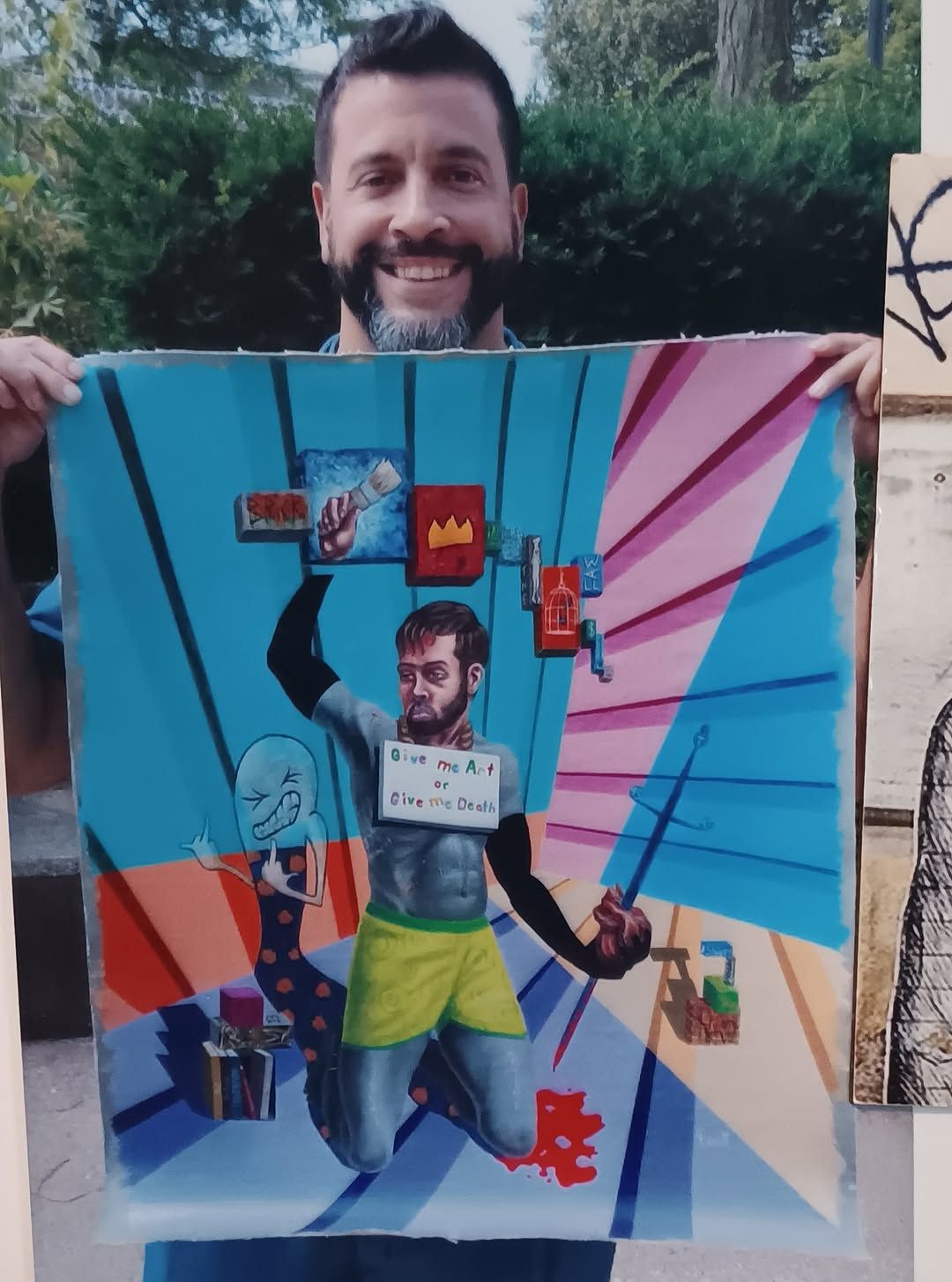
Christopher Levitt holds one of his paintings. Photo courtesy of Christopher Levitt.
The class caught the attention of others on campus. When his assignments began arriving, word spread, Levitt said. Faculty and students came to the Extended Studies office to see the work, and the dean proposed a student gallery show. But as Levitt prepared for the exhibit, he couldn't shake a feeling of sadness — knowing no other incarcerated student would have the same opportunity. So he wrote two proposals to the dean.
The first was for a formal correspondence drawing course, designed so that any incarcerated person could complete it regardless of what materials they had access to. The second proposed an auction of his artwork, with proceeds going to a scholarship fund for incarcerated students at CSU Pueblo. Both were approved in fall 2023.
Olsen wrote the curriculum, drawing heavily on the independent study she had done with Levitt. He helped her navigate the realities of the prison environment: what supplies students are actually allowed to have, how to structure assignments when someone might have limited materials, and what it means in practice to ask someone to draw another person.
"I had no concept of what the prisons allow and what they don't allow," Olsen said. "He can have paint brushes, and can order all sorts of supplies. Somebody in a different facility might only get a pencil and a scrap piece of paper."
The course was designed to work whether a student receives materials by mail or takes the class online, with assignments adapted accordingly. It is now part of CSU Pueblo's correspondence degree program, which is open to incarcerated students nationwide. Students can enroll in individual courses without pursuing a degree.
Most incarcerated students taking correspondence courses pay out of pocket. While Pell Grant eligibility for incarcerated students returned in 2023, no correspondence programs are known to have been approved to accept the federal financial aid. The approval process has to go through the federal Education Department as well as regional accreditation agencies. CSU Pueblo is working toward Pell eligibility for degree-seeking students in Colorado, but for now, students across the country who enroll in its program pay tuition themselves. Each academic credit costs $230, according to CSU Pueblo’s Extended Studies program.
The scholarship fund, named the Levitt Fund, began awarding money in fall 2024. It has raised a little over $8,000 since 2023, primarily through CSU Pueblo's annual Give Day and art show sales, and has awarded scholarships to three students so far. It is the only scholarship CSU Pueblo currently offers specifically for its incarcerated students. The fund's longer-term goal is to become an endowed scholarship to ensure sustainability, Gama said.
"Christopher is just a remarkable student and a remarkable artist — and very generous," Gama said. "He's always thinking not just about showing his artwork, but about how it could help support others."
It awards up to two scholarships per semester to degree-seeking students, worth up to $800 each — enough to cover a three-credit correspondence course and some materials. Students must be admitted to a degree program to be eligible for the scholarship. One scholarship is open to any subject area; the other is designated for art-related courses, a category Levitt wanted to expand to include creative writing to reach more students.
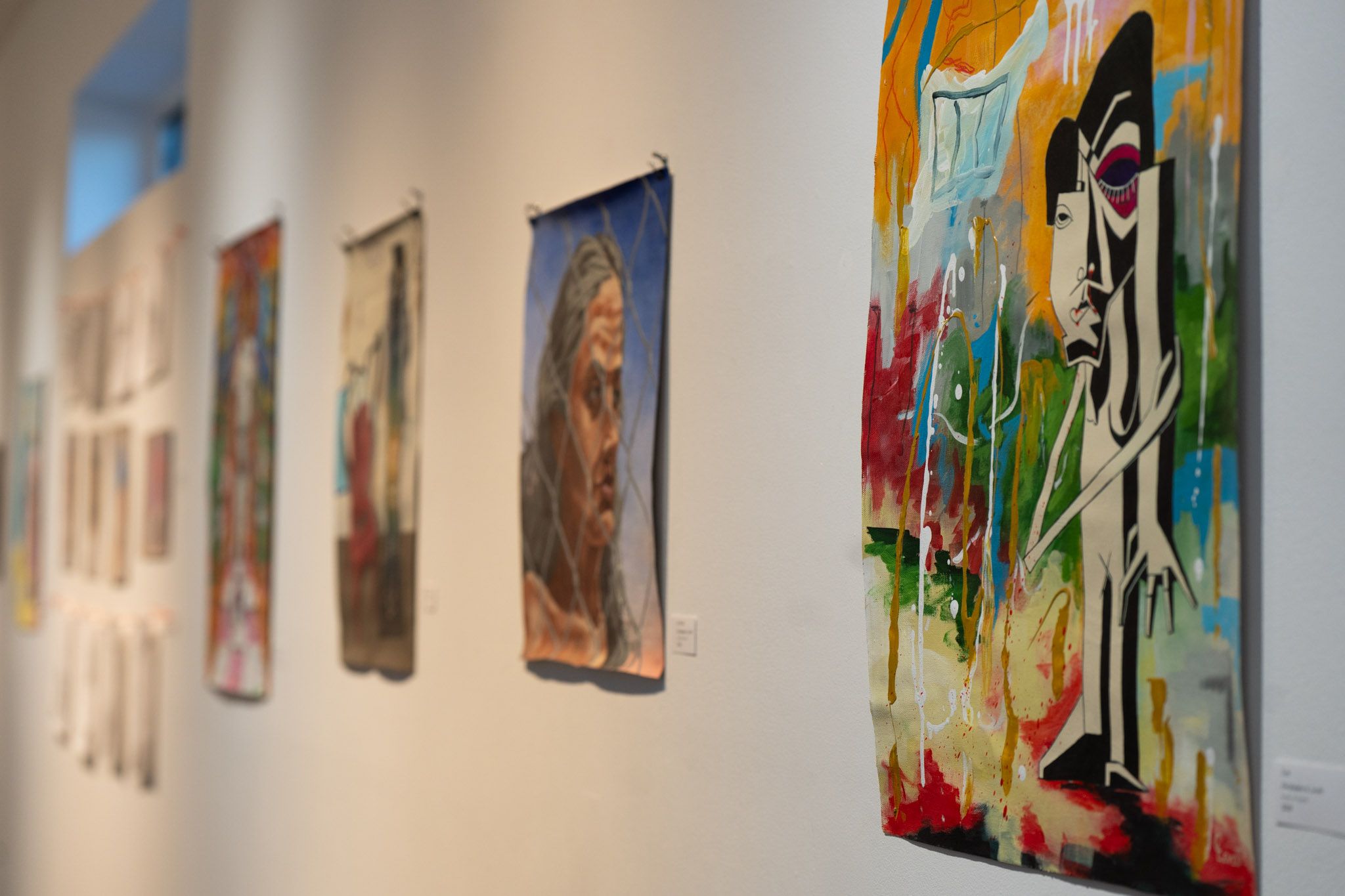
Christopher Levitt’s show at Blo Back Gallery in Pueblo, Colorado. Photo courtesy of Colorado State University Pueblo.
Levitt said the expansion was also intended to push back against the constraints many incarcerated students face.
“The prison system in America uses censorship and access to quiet and contain the voices and creativity of incarcerated persons,” he wrote. “By expanding access to art and writing, my hope is that more incarcerated persons will be able to see themselves as individuals who matter and have something to say.”
Levitt remains a student at CSU Pueblo. He also participates in the University of Michigan's Prison Creative Arts Project, an annual juried exhibition of work by incarcerated artists.
Levitt’s next show at Blo Back Gallery in Pueblo, Colorado, is scheduled for Friday, April 3, from 5 to 8 p.m. Proceeds will benefit the Levitt Fund. More information is available here.
Related:
News & views
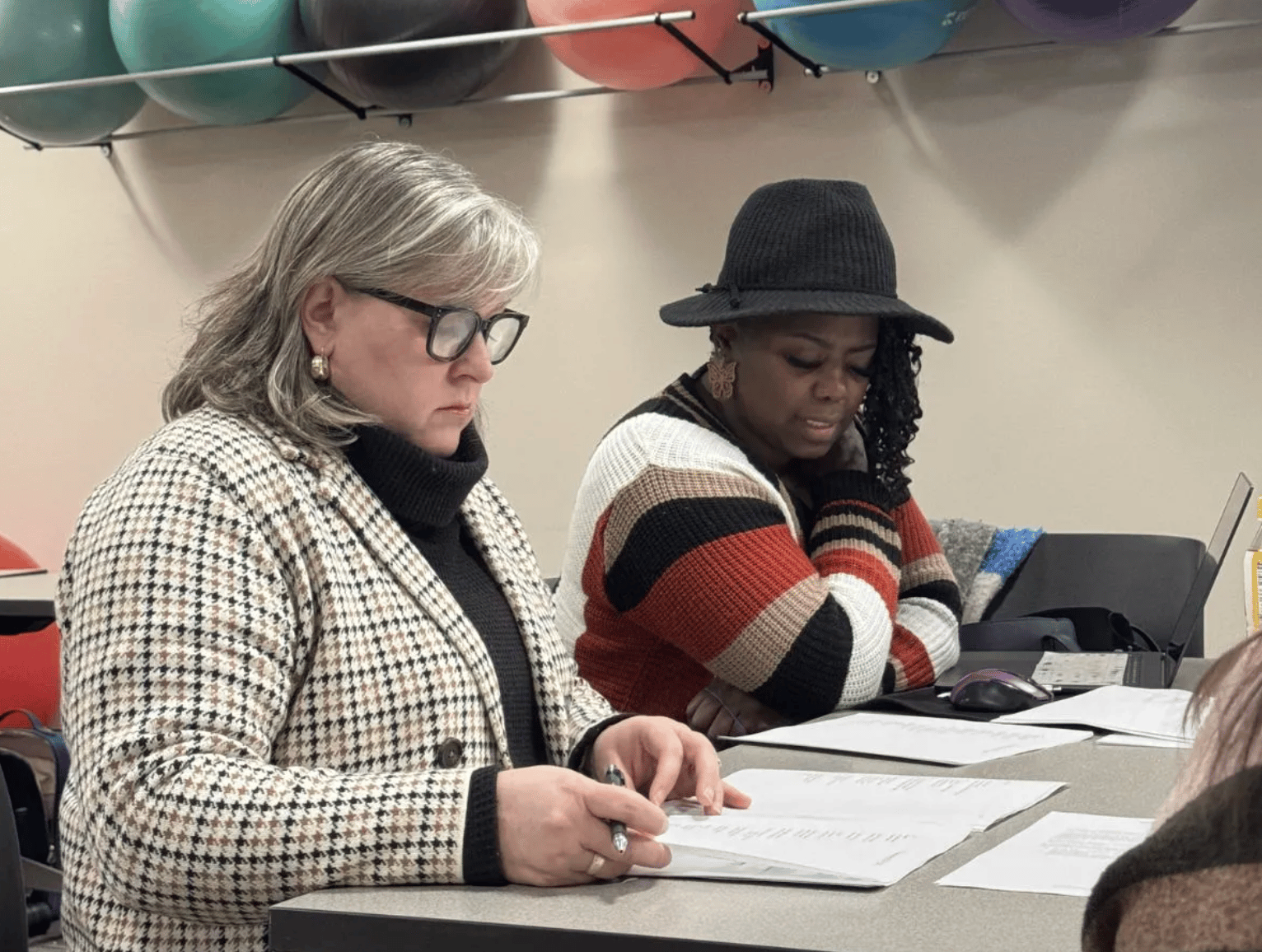
Tracy Manning and Alicia Sims rehearse the play "Re-Entry" Feb. 24 at the IU Health Sciences Building in Indianapolis. Credit: Provided photo/Summit Performance Indianapolis
Our local partner Mirror Indy recently published a story on a new play centered on reentry and life after incarceration, based on interviews with 20 women in Indianapolis.
The performance brings those experiences to the stage, focusing on the challenges people face navigating housing, employment and relationships after release.
“People forget that these are not just folks we tuck away and never think about or talk about again,” director Morgan Morton told Mirror Indy. “We should be reframing things so that we really do think about them as our neighbors.”
Let’s connect
Please connect if you have story ideas or just want to share your experience with prison education programs as a student or educator. You can always reach me at [email protected] or on Bluesky, LinkedIn, or Instagram. To reach me via snail mail, you can write to: Open Campus, 2460 17th Avenue #1015, Santa Cruz, CA 95062.
We know that not everyone has access to email, so if you’d like to have a print copy College Inside sent to an incarcerated friend or family member, you can sign them up here. We also publish the PDFs of our print newsletter on the Open Campus website.
There is no cost to subscribe to the print edition of College Inside. But as a nonprofit newsroom, we rely on grants and donations to keep bringing you the news about prison education. You can also donate here.
Interested in reaching people who care about higher education in prisons? Get in touch at [email protected] or request our media kit.