- College Inside
- Posts
- The HBCU president making the case for college in prison
The HBCU president making the case for college in prison
A new initiative out of South Carolina is recruiting HBCU presidents to bring their institutions into the prison education space.

Charlotte West
April 09, 2026

A biweekly newsletter about education and employment during and after incarceration. Written by Open Campus national reporter Charlotte West.
Greetings from Cleveland, where I'm attending the National Conference for Higher Education in Prison this week. On Friday, April 10 at 3 pm, I'll be on a panel about quality jobs during reentry with Jobs for the Future — informed by a joint survey we’re doing about people’s experiences with college and career during reentry. (And if you’re formerly incarcerated and you haven't taken the survey yet, we'd love to hear from you!)
Also this week: tune in this Sunday, April 12 to Prisoncast! — a special two-hour episode on WBEZ, our local partner newsroom, focused on education in Illinois prisons, airing from 2-4 pm central. The episode features a story I reported on the impact of criminal history disclosure on graduate admissions at Illinois universities.
Also check out this new documentary from Roadtrip Nation, now streaming on their website. I advised on the film, which features Open Campus writer Kun Lyna “K” Tauch and two other formerly incarcerated students navigating life after prison.
‘We are not entering foreign territory — we are extending our mission’

Stanley Andrisse, professor at Howard University; Ivan H. Allen, president of Central Georgia Technical College; Dwaun J. Warmack, president of Claflin University. Photo courtesy of Claflin University.
Historically Black colleges and universities have long served communities most impacted by mass incarceration — but they've been slow to enter the prison education space. A new initiative led by Claflin University President Dwaun J. Warmack and Howard University professor Stanley Andrisse, a formerly incarcerated scholar and national advocate, is trying to change that.
The HBCU Higher Education in Prison Initiative started in South Carolina, where five HBCUs are already operating prison education programs — the only such unified HBCU presence in the country, according to Warmack. The goal is to expand that model nationally, with a recruitment strategy built around getting college presidents personally on board.
The initiative is built on the conviction that this work doesn't take root without senior leadership driving it. When an HBCU president commits, the institution commits — and doors to partnerships, funding, and policy change open in ways they simply don't otherwise. "When presidents lead, programs have authority, visibility, and resources," Warmack said.
Andrisse frames the broader mission in similar terms. "When HBCUs step into the prison education space, we are not entering foreign territory — we are extending our mission," he said.
For Warmack, the work is also personal. "Members of my own family have lived this experience," he said. The moment it truly hit home was when the first incarcerated scholar from his program walked across the stage to receive his degree. "His degree didn't just change his life — it holds the potential to change the trajectory of his children's lives."
The history of tech in Washington state prisons
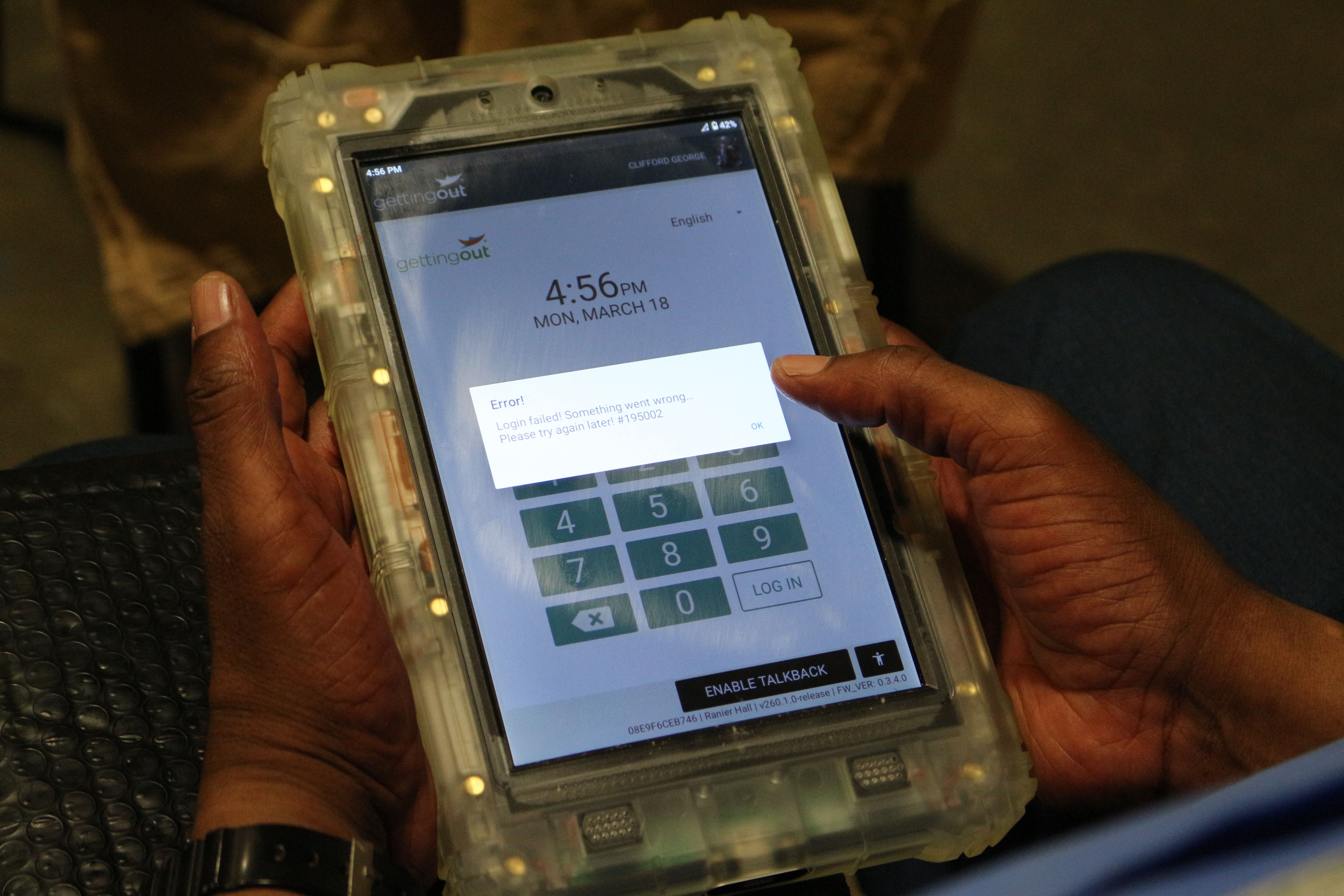
Photo by Charlotte West for Open Campus.
In 1989, the Washington State Reformatory in Monroe became the first prison in the country to allow incarcerated people to own personal computers. The program had been running for three years — people learned skills, got jobs in tech, and barely anyone returned to prison. Then a new DOC director shut it down. And today, more than 35 years later, we're still debating whether people in prison should have meaningful access to technology at all.
That history is the subject of a recent blog post from the Washington Prison History Project. Written by Yael Eiger, a PhD student at the University of Washington who researches technology in the carceral system, it draws on a rich archive of documents to trace the history of computer access at the Washington State Reformatory — and a lot of it felt familiar.
The program grew out of frustration with what the prison's own education classes offered — outdated Radio Shack computers shared among multiple students, teaching skills that had little application in the real world. Incarcerated people at the reformatory spent two and a half years lobbying before the administration allowed them to buy their own machines with their own money.
Eiger's central argument is that technology in prison has consistently been framed as being for incarcerated people — workforce preparation, rehabilitation, digital literacy — while simultaneously serving institutional interests: cheap labor, surveillance, control. The benefits are real, but fragile. And the pattern repeats — from a 1967 IBM coding program at Arizona State Prison to what incarcerated people told us about their tablets in a survey we did a few years ago.
We've seen this dynamic much more recently too. In 2024, after an electrical engineer in Boston bought a secure prison laptop on eBay and tweeted about trying to crack it, state corrections officials collected all 1,200 secure laptops from incarcerated students statewide — even though no one inside had attempted anything. "An abundance of caution," officials said. Students eventually got their computers back, but lost access to their coursework in the meantime.
It's worth reading Eiger's whole post. She also writes about the archive's documentation of surveillance of political groups inside Washington prisons — history with a clear line to the AI tools now used to monitor and censor messages between incarcerated people and the outside world.
Let’s connect
Please connect if you have story ideas or just want to share your experience with prison education programs as a student or educator. You can always reach me at [email protected] or on Bluesky, LinkedIn, or Instagram. To reach me via snail mail, you can write to: Open Campus, 2460 17th Avenue #1015, Santa Cruz, CA 95062.
We know that not everyone has access to email, so if you’d like to have a print copy College Inside sent to an incarcerated friend or family member, you can sign them up here. We also publish the PDFs of our print newsletter on the Open Campus website.
There is no cost to subscribe to the print edition of College Inside. But as a nonprofit newsroom, we rely on grants and donations to keep bringing you the news about prison education. You can also donate here.
Interested in reaching people who care about higher education in prisons? Get in touch at [email protected] or request our media kit.
Know others that are interested in higher ed in prisons? Let them know about the newsletter. Thanks!
You currently have 0 referrals, only 2 away from receiving a Twitter Shoutout.
Or copy and paste this link to others: https://college-inside.beehiiv.com/subscribe?ref=2p6y6raqDY